By Avery Martin, SCSU Journalism student
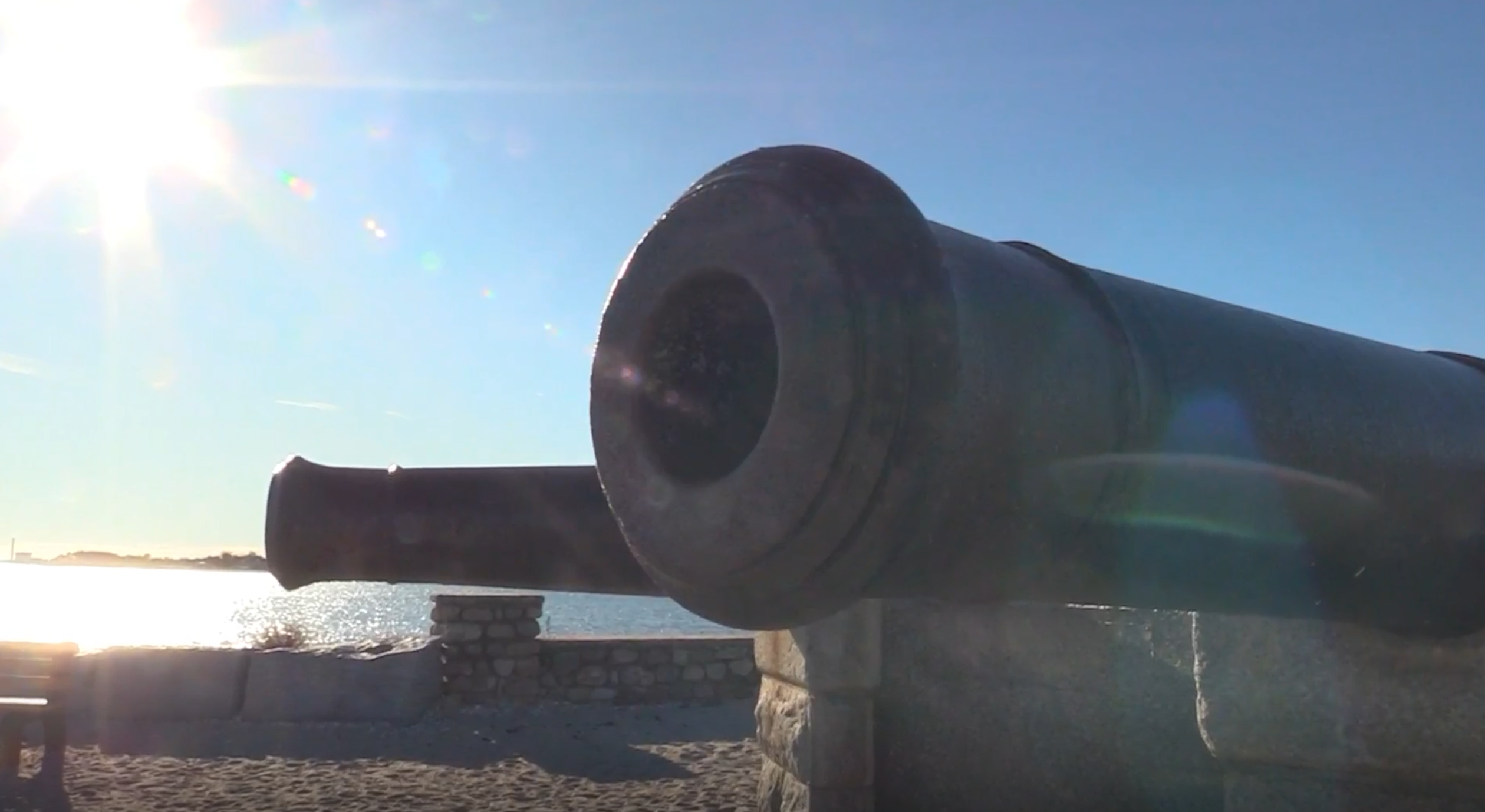
The symbolic metal cannon statues that stand today on Compo Beach in Westport are a visible symbol of the town’s Revolutionary connection. British ships landed in what is now Cedar Point, Westport on April 25, 1777 on their way to raid a supply depot in Danbury.
“It was between about seven and eight o’clock at night, and it was raining and dark and the temperature was rapidly dropping. It was quite cold,” Ramin Ganeshram, executive director of the Westport Museum for History and Culture, said. “They then loaded into smaller boats and rowed into Compo beach.”
Compo Beach and Cedar Point are among dozens of Revolutionary War sites in Connecticut drawing attention during the nation’s 250th celebration in 2026. Additionally, the Connecticut Revolutionary War Trail, a project of the Connecticut Veterans Coalition, highlights more sites around the state worth visiting. See the full Connecticut Revolutionary trail here.
Upon landing in April 1777, British troops marched through the night to Danbury. They were headed to retrieve needed supplies.
“Connecticut was essentially the food supply colony, in this period of time,” said Ganeshram. “They had heard that there was a supply depot in Danbury that included tents, guns, gunpowder, and food. That’s why they were heading to Danbury. They made it to Danbury relatively unopposed, because they got there under the cover of night.”
The route back would not be so uneventful. After the Battle of Ridgefield, the British troops under Lieutenant-General William Tryon faced local Patriot forces near Compo Beach in what is now Westport.
However, the Patriot troops, under the command of then-Patriot General Benedict Arnold, were not well-supplied enough and were taken unawares of the British battle plans.
“By the time Arnold realized what was going on, most of the other two groups had made it to their ships. There was a skirmish with the British when they finally came down that roadway, but it would amount to nothing, and they pretty much made it all the way to their ships,” said Ganeshram.
The area including Norwalk and Fairfield was burned later in the war, and Ganeshram said that devastated the area.
But some in the town found more than national independence when the war was over.
The Museum houses documents that name three enslaved Westport men who were able to leave with the British at the end of the war and resettle as free men in Canada: Ishmael Coley, Jack Coley, and Jack Hyde.
“But to me, what was the most interesting end result in this town and similar towns, but that we have proof of here in Westport, is the formerly enslaved people who are able to self emancipate by going with the British [to Nova Scotia],” said Ganeshram. “They built a life there.”
Avery Martin, a journalism student at Southern Connecticut State University, reported this story in 2025 as part of Journalism Capstone coursework on the Revolutionary War.