Lexi White, SCSU Journalism student
Piles of stones mark where 116 soldiers’ huts once stood at the Revolutionary War encampment in Redding.
They were once chimneys in the small cabins that housed Gen. Israel Putnam’s Continental Army troops during the winter of 1778 and 1779. Now preserved at the grounds of Putnam Memorial State Park, the site gives insight into what state historians now call “Connecticut’s Valley Forge.”
“Winter encampments are supposed to be temporary; they’re not supposed to last,” Putnam Memorial State Park Historian Ellery Thomas Leary said. “So, the fact that all of those stones are there and more or less the same place they were when they fell, is really an incredible historical and archeological resource that I’m glad was preserved.”
The state park, with its history-filled walking trails, visitor’s center and museum, is one stop on the Connecticut Revolutionary War Trail. The project of the Connecticut Veterans Coalition honors the 250th anniversary of the signing of the Declaration of Independence by highlighting Revolutionary War sites around the state, and encouraging residents to visit and learn more about the people who fought for American independence. See the full trail here.
Numerous lifestyle items from the encampment, such as horseshoes, nails, plates, eating utensils, work tools and gun barrels, have been preserved and are on display at the park museum.
“We’re doing more research all the time and finding out a lot more about people who were here at the encampment, and incorporating that into our public interpretation,” Thomas Leary said.
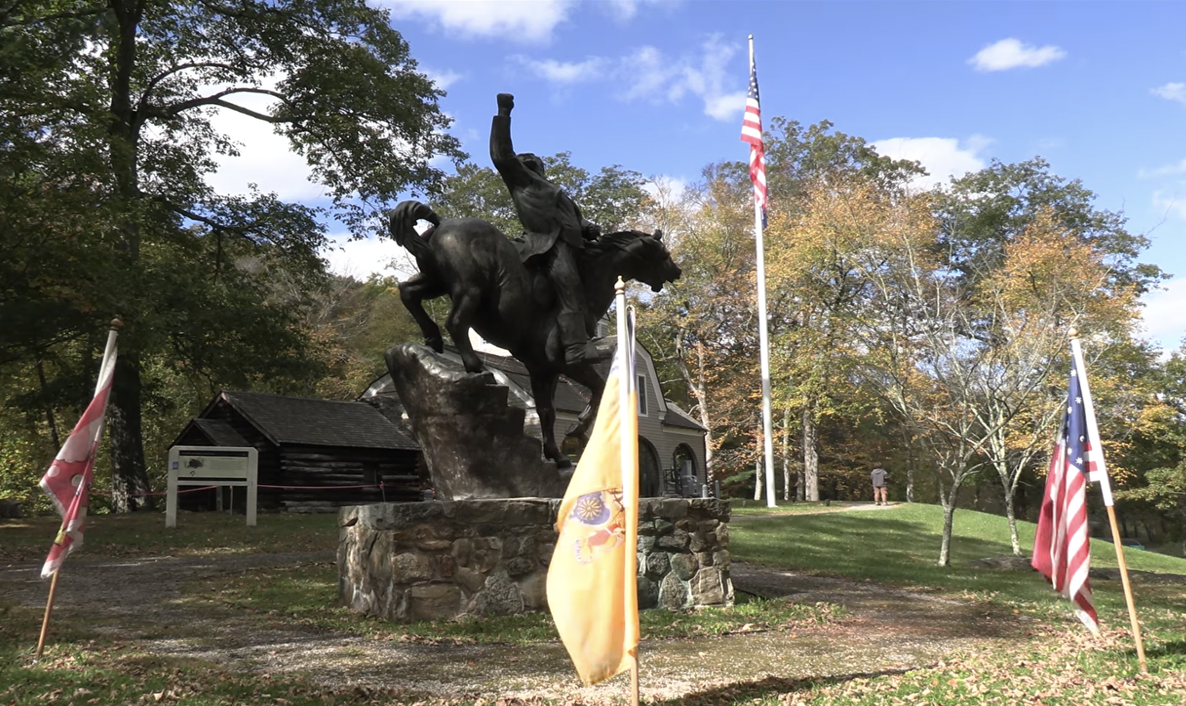
Visitors to the park are greeted with a statue honoring Gen. Putnam, sculpted by artist Anna Hyatt Huntington. It depicts Putnam riding his horse down a set of stone stairs, re-enacting a legend of Putnam’s escape on horseback from British troops in Greenwich, Conn. that same winter.
“It was very exciting to have a centerpiece like that, because she really is an incredible sculptress and having her donate that to Putnam Park, rather than placing it in Greenwich, where the event happened, was really sort of a token of her love for the town, and sort of signified her trust in Putnam Memorial State Park to take care of it,” Thomas Leary said.
Lexi White, a journalism student at Southern Connecticut State University, reported this story in 2025 as part of Journalism Capstone coursework on the Revolutionary War.