By Brianna Wallen, SCSU Journalism student
Even as the colonies were fighting for independence and promoting ideals of liberty, Connecticut’s Old New-Gate Prison became a holding site for those with opposing political views.
“George Washington sent court-martialed men here during the American Revolution,” Morgan Bengel, museum curator of Old New-Gate Prison, said. “And then this was a loyalist prison.”
Tucked in the quiet hills of East Granby, Old New-Gate Prison and Copper Mine represents the earliest days of America’s justice system.
“That’s the first state prison in the nation,” Bengal said, “That is a big deal for Connecticut’s local history, but also the history of the country.”
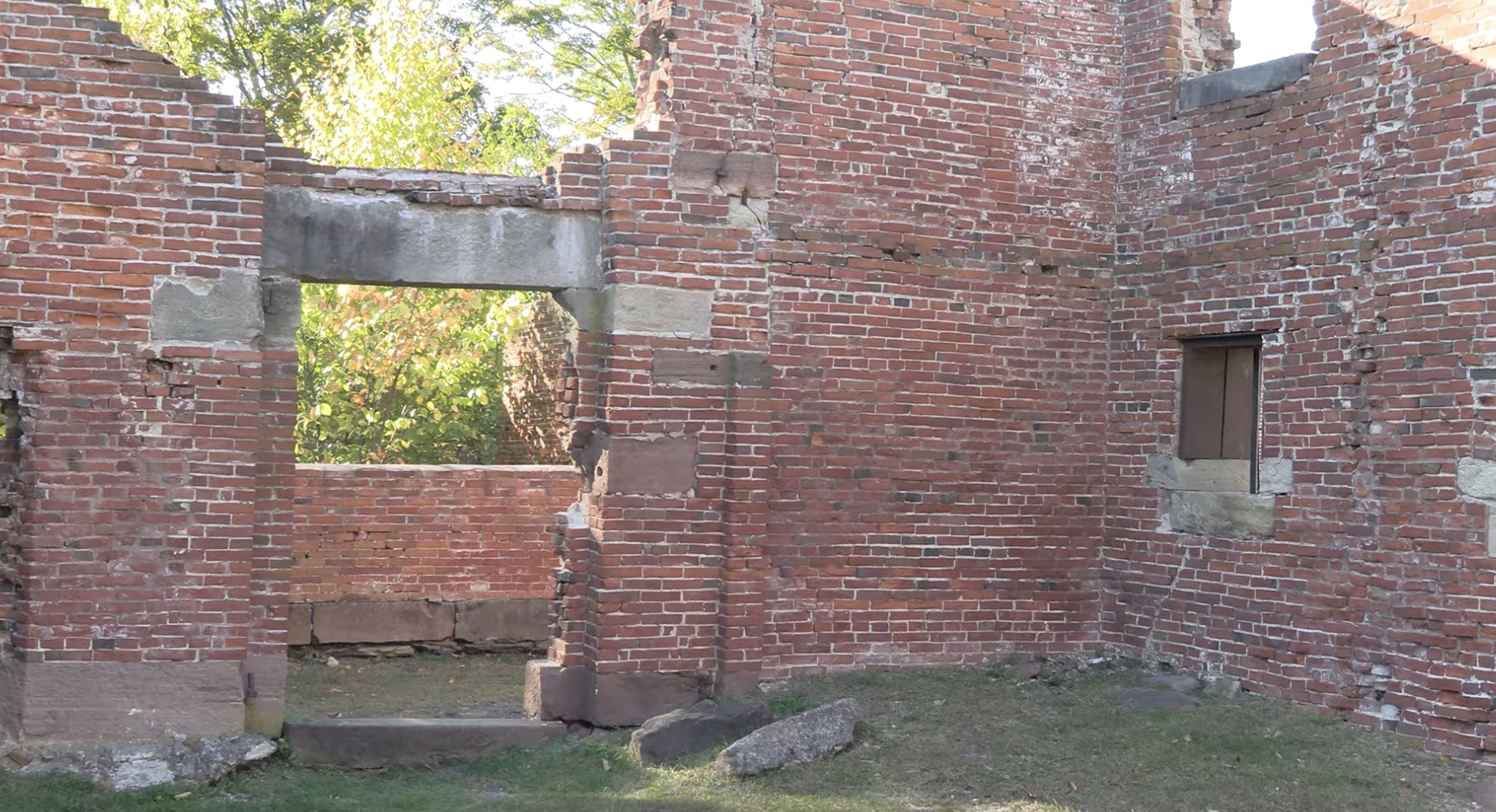
The prison grounds and museum are one stop on the Connecticut Revolutionary War Trail, a project of the Connecticut Veterans Coalition for the 250th anniversary of the signing of the Declaration of Independence. See the full trail here, which includes dozens of Connecticut sites with Revolutionary War connections.
As part of the national celebration, Old New-Gate Prison received a National Park Service Semiquincentennial Grant to restore a tavern on the grounds in order to open it for public use.
The prison’s roots stem back to its time as a copper mine in the early 1700s, when colonists in what was then Simsbury began mining copper in hopes of flipping a profit. The mine operated for decades before being abandoned in the 1750s. Once the tunnels became bare, officials decided to replace workers with prisoners by housing men in the copper mine.
“A group of men were sent to this area to scout out the mines, and their goal was to profitably employ the prisoners in prison in lieu of infamous punishment,” Bengel said.
This shift marked a turning point in how punishment was carried out in the colonies. Instead of relying on public whippings, brandings, or other forms of corporal punishment, officials experimented with forced labor and confinement.
“We cannot consider it a state of reform. We consider it inhumane treatment. But that was the purpose,” Bengel said.

From 1773 to 1827, the prison held hundreds of men in harsh living conditions.
This political tension during the Revolution met its breaking point on May 18, 1781, when the largest mass breakout in its history occurred at New-Gate Prison with predominantly loyalists escaping.
Bengel believes that the history Old New-Gate offers forces visitors to think critically about the justice system’s origins.
“So at the time when America is fighting for their political freedom, their freedom and rights, they’re incarcerating people for their own political ideology, and that says a lot about our justice system,” Bengel said. “Who are we criminalizing at what eras in history and why? What does that say about our society?”
Now standing as a tourist site, Bengel hopes not only visitors enjoy the experience, but also view the prison as a place to spark deeper reflection. Through exhibits, partnerships and programs, the staff encourages people to think critically about incarceration in both the past and present.
“I want people to critically think about prison. I think New-Gate is a great representation of the experiment that is the justice system in America.”
Brianna Wallen, a journalism student at Southern Connecticut State University, reported this story in 2025 as part of Journalism Capstone coursework on the Revolutionary War.