By Natalie Accardi, SCSU Journalism student
It began with a scrap of paper tucked inside an old journal.
That’s how 95-year-old author Patricia Q. Wall learned the more personal insights of Joseph Knap, a Stratford town official and storekeeper, who lived during the Revolutionary War.
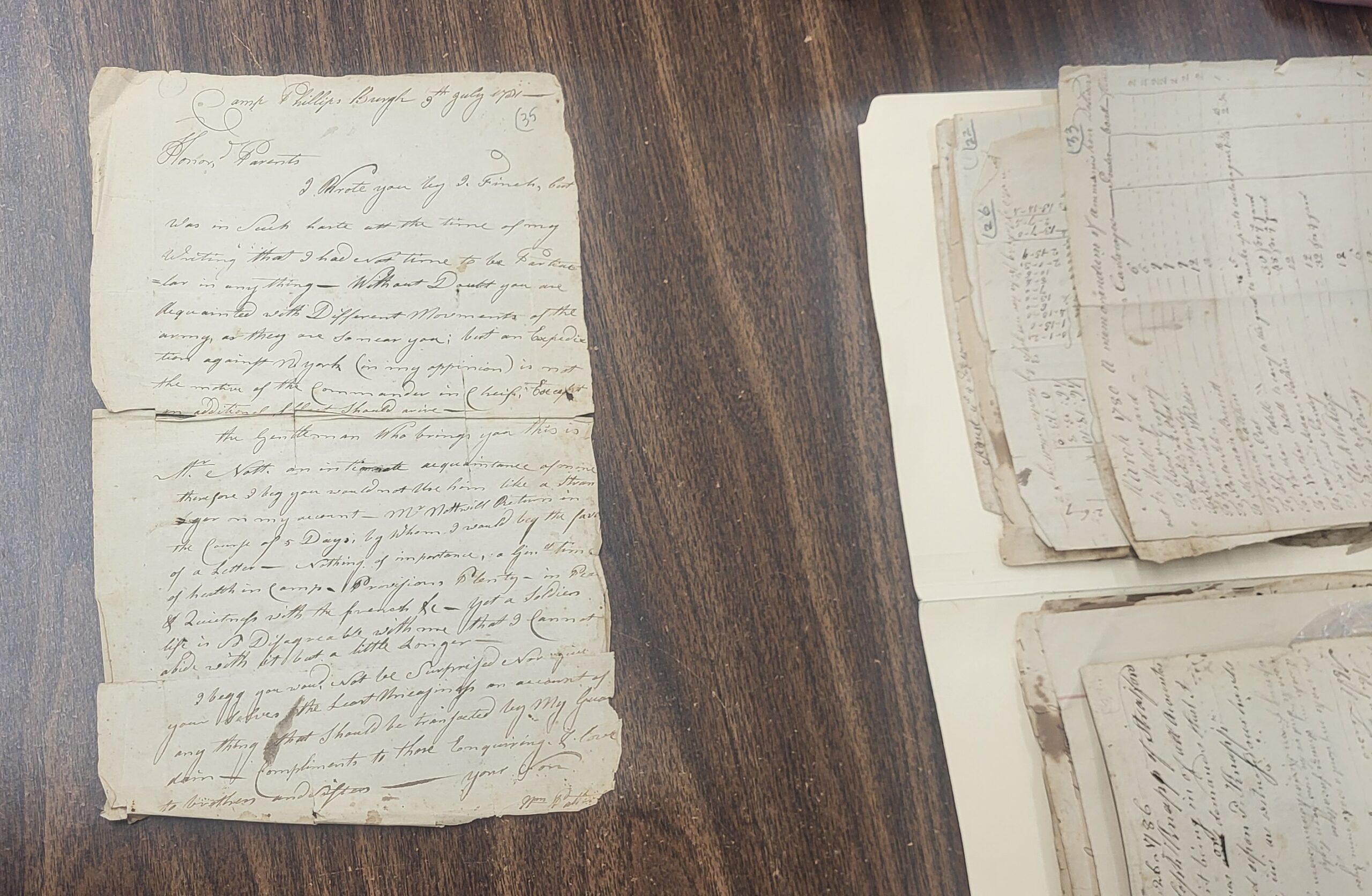
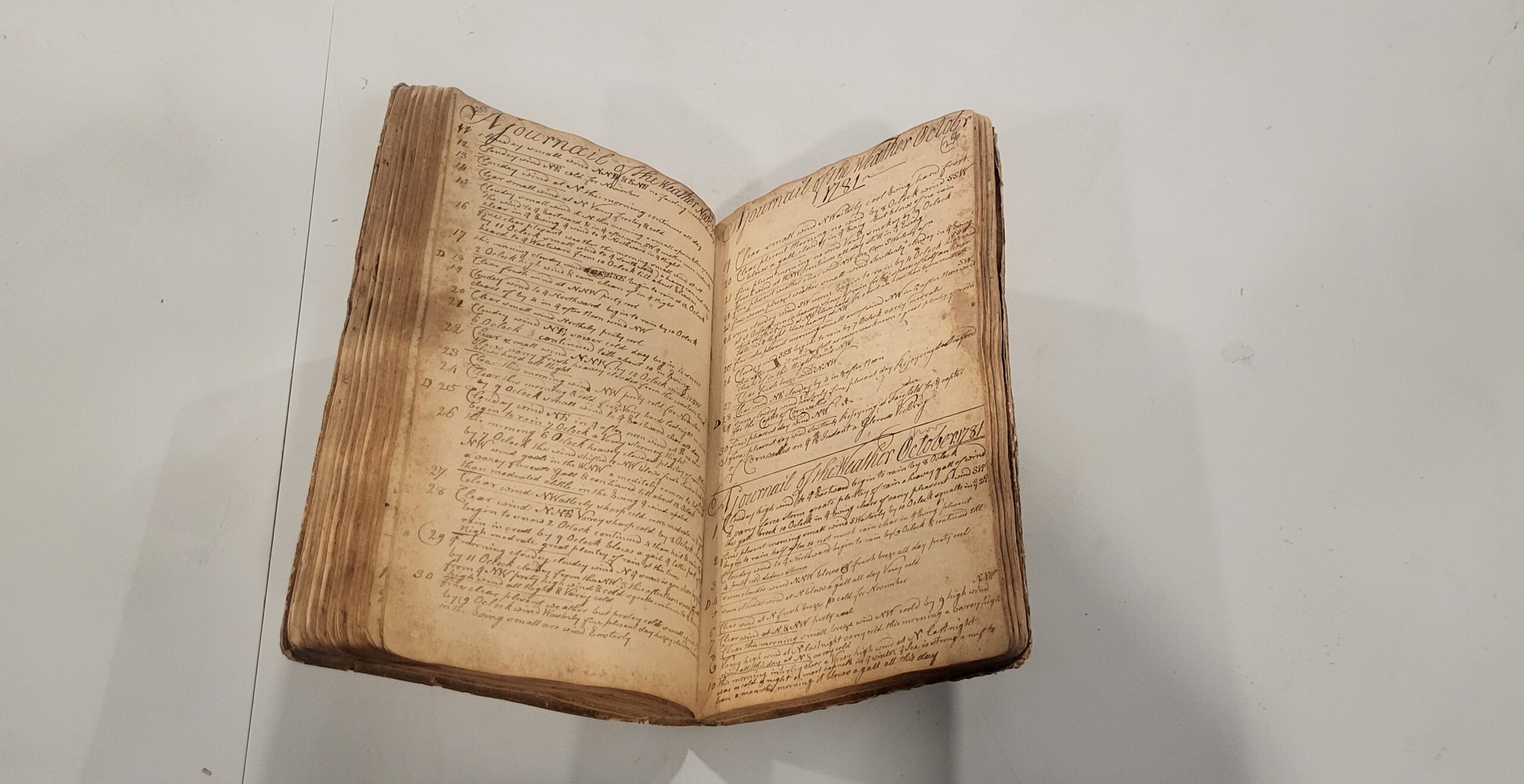
His journals were the primary source of Wall’s book, “Of Life and the American Revolution, The Journals of Joseph Knap 1761-1808.” She said his journals were mostly unopinionated and dry when documenting the war – except for those scraps.
Knap read one such scrap: “A wet darkness carved what darkness or shreds the land, not with clouds but calamities, both with sickness and disorder.”
According to Wall, this was in reference to the ongoing war ripping Fairfield County apart, turning neighbor against neighbor.
Wall worked as a historian at the Darien Historical Society, and her passion for history has continued into her retirement. She has authored several historical fiction books, including “Child Out of Place: A Story of New England,” a children’s book that centers around slavery and the Black experience in the early 19th century.
Wall said she aimed to provide a new perspective on life during the Revolutionary War in her book about Knap.
“It’s always the point to move history’s needle. That’s the whole reason. If you’re just going to get in there and repeat what everybody knows, then you haven’t accomplished anything,” said Wall. “I think over the years, the conclusion was, well, this happened here, and this little incident here, but the revolution marched elsewhere. It happened out on the battlefield, but when you begin to see it closer, and you begin to see Stratford men rushing down to Norwalk, and or down the coast, and everybody trying to figure out how in the world to help Greenwich.”
Wall had his journals for years; they were given to her by a descendant of Knap. When she was downsizing, she began reading them by chance, and she said she started to notice snippets of comments about the Revolutionary War amidst almost 30 years of weather observations and business account ledgers she combed through meticulously.
The Stratford Historical Society published her book and ensured it was put into the Library of Congress, the world’s largest research library. The book is also the first to be published by the organization, according to Stephanie Kadam, executive director of the Stratford Historical Society.
Kadam said the book chronicles the life of an ordinary Stratford man during the Revolutionary War.
“The revolution has been studied since it happened, basically, so the last 250 years. So when you find something new to look at, it’s exciting. But also, because he was kind of a regular guy. He wasn’t like a George Washington or a [Gen. Marquis de] Lafayette,” she said. “He was a guy who lived in Stratford. He was on the town council. He had a store. He had some farms. He was just a regular citizen, and he was able to pick up his arms when he needed to, to defend the town.”
Natalie Accardi, a journalism student at Southern Connecticut State University, reported this story in 2025 as part of Journalism Capstone coursework on the Revolutionary War.