By Kahiona Senior and Jasmine Williams, SCSU Journalism students
Norwalk’s near destruction in 1779 is one local example of how American independence came at a cost.
British troops landed during the early morning hours of July 11 and moved through the town with little resistance. Although a small number of American militiamen attempted to defend the area, they were outnumbered and outmaneuvered.
“Back in June ’79, General (Henry) Clinton had decided that he needed to strike fear into the hearts of inhabitants of Connecticut,” said Edward Eckert, Norwalk Historical Society board member. “So, he devised a plan to attack several of the cities or several of the coastal towns. Norwalk became the most burned city in the state.”
British forces set fire to homes, warehouses, mills, barns, churches, and civic buildings. More than 130 buildings burned during the attack.
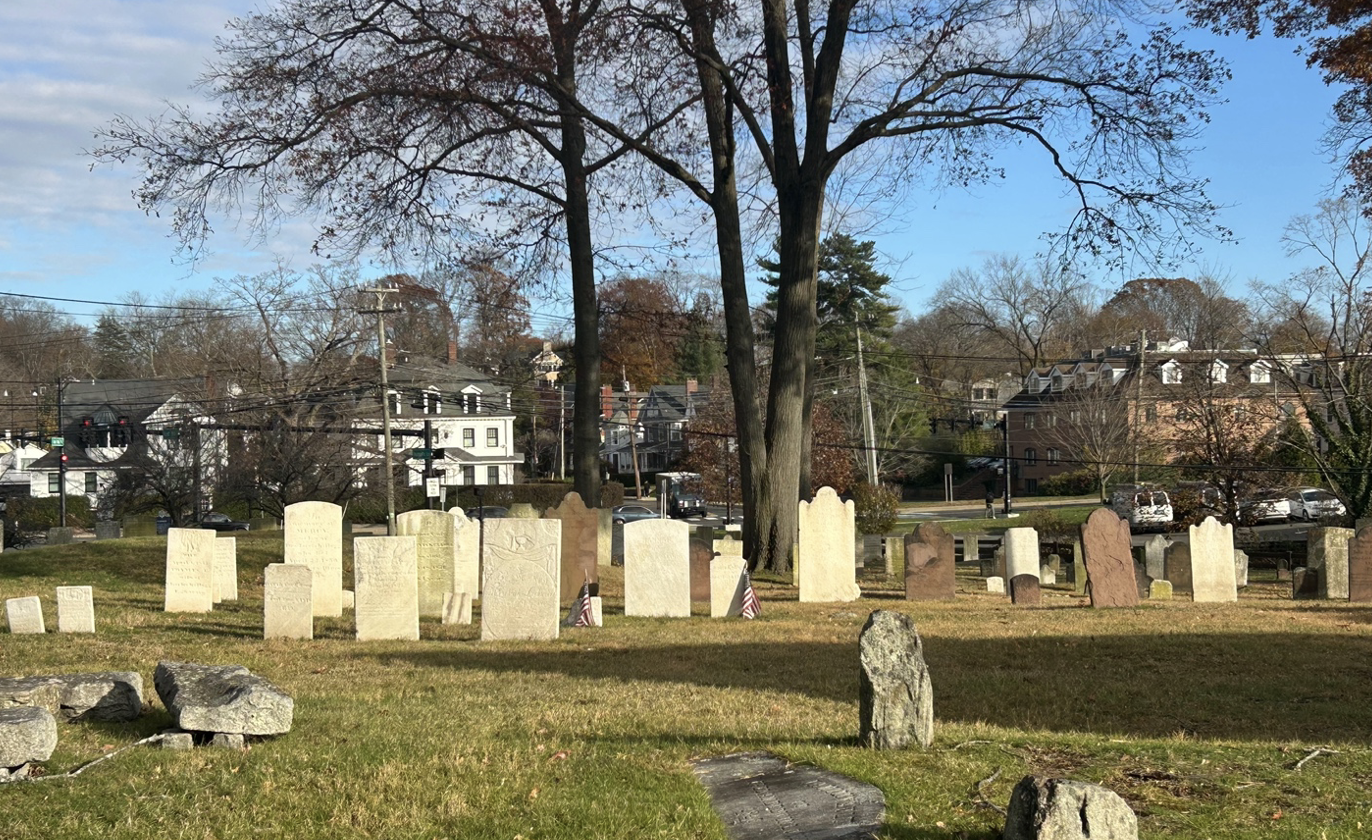
Because of its elevation and proximity to the main roadway, Norwalk’s town center Mill Hill offered a strategic vantage point, and it became one of the areas where patriot forces tried to slow the British advance. Mill Hill Historic Park now helps preserve the memory of that destruction.
Today, it includes remnants of that original community and a historic cemetery where individuals from the Revolutionary era are buried. It connects modern visitors to the lived experiences of the Revolution and underscores how the fight for independence unfolded.
Mill Hill is one stop on the Connecticut Revolutionary War Trail, a project of the Connecticut Veterans Coalition for the 250th anniversary of the signing of the Declaration of Independence. See the full trail here. Other Norwalk sites include the Norwalk Historical Society Museum and Flax Hill Monument, which includes a cannonball retrieved from the battle.
Eric Chandler, vice president of the Norwalk Historical Society, said to understand the burning of Norwalk, begin with viewing Connecticut within a “larger context” of the Revolutionary War.
“Connecticut was extremely important to Gen. Washington,” Chandler explained, describing that Connecticut Gov. Jonathan Trumbull served as one of Washington’s most loyal supporters. “It was vital throughout the course of the war.”
The state produced much of the Continental Army’s weaponry, and innovations such as David Bushnell’s early submarine, designed while he was a Yale student, added value to Connecticut’s military, Chandler said.
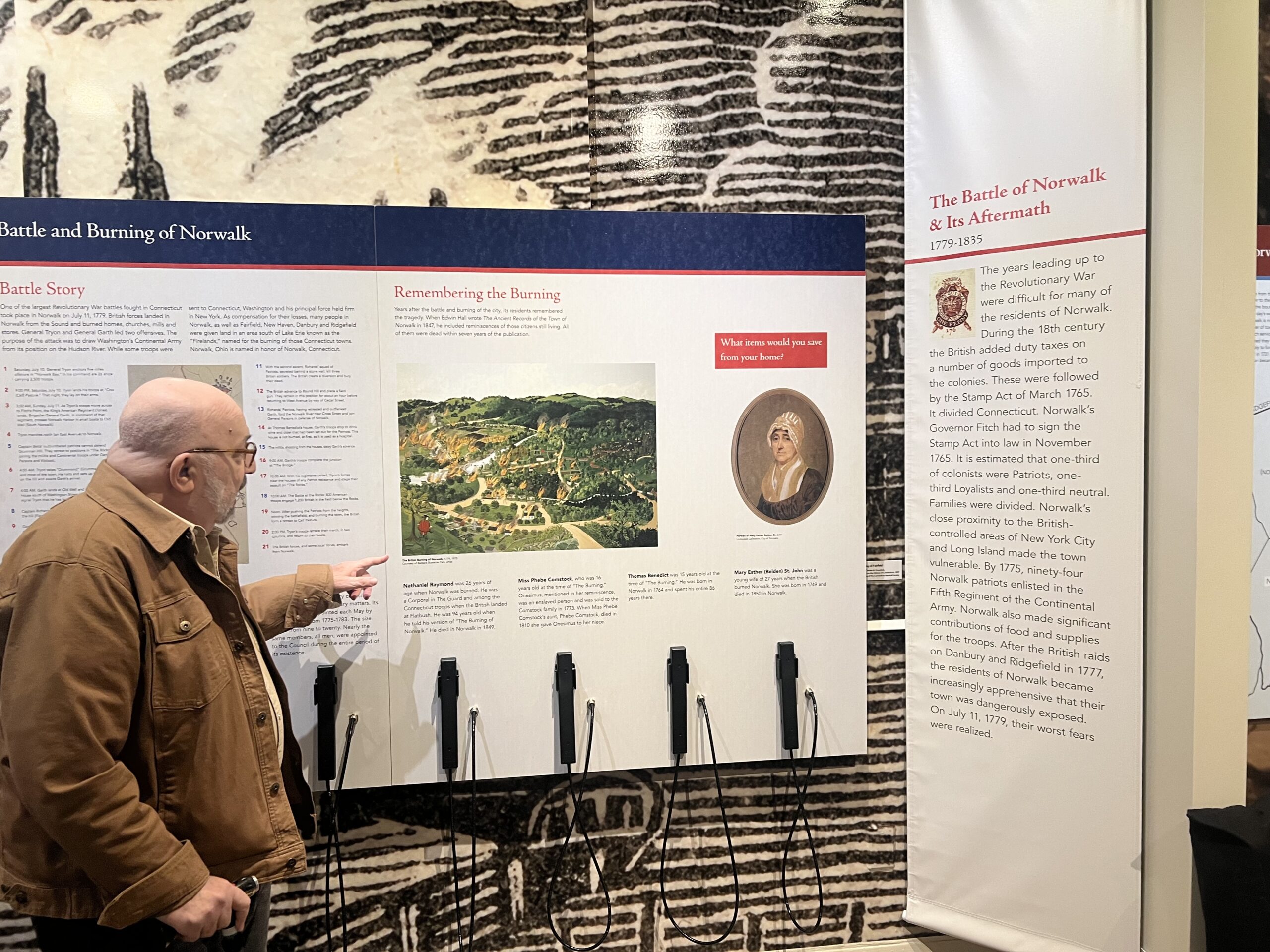
Despite the attack, some resources were still intact. The Continental Army’s supply depot for the region was overseen by Norwalk merchant Eliphalet Lockwood. While his shop at the harbor was burned, the military supplies were stored farther inland.
“The British never got to that place,” Chandler said. “Within two weeks, the commissary system was back up and running.”
Recovery, for the community, however, was very slow. It took nearly a century, according to Chandler.
About 30 years later, Connecticut families who suffered losses from the British raids, including Norwalk residents, were compensated with land in what was known as the Firelands in the Connecticut Western Reserve in Ohio. Many Connecticut families resettled there, bringing their town names and architectural styles with them.
Today, Norwalk continues to honor this history through annual commemorations of the Burning of Norwalk and reenactments.
“I think every town in the country, I think every town in the world at this point is interconnected,” said Eckert. “I think that we have to know that we are a unified country and we’re networked throughout the entire country. And it’s very important that, every town pay its respect to that level of continuity for the nation.”
Kahiona Senior and Jasmine Williams, journalism students at Southern Connecticut State University, reported this story in 2025 as part of Journalism Capstone coursework on the Revolutionary War.