By Avery Martin, SCSU Journalism student
A large stone monument with a carving of a French general sits in the front yard of a Marion Avenue home in Southington: Long before the modern homes, driveways, and roads, this was the site of the French military encampment during the Revolutionary War.
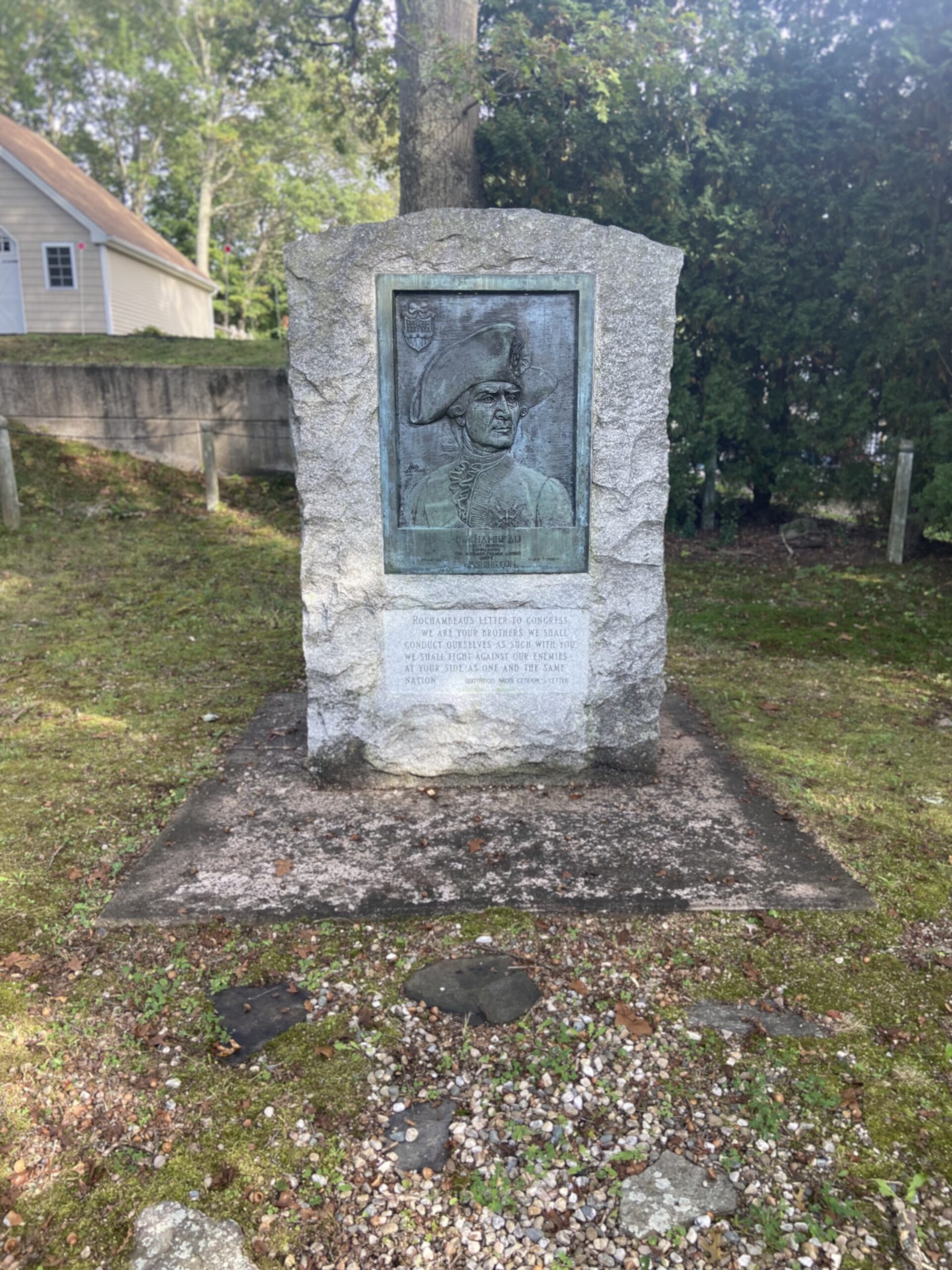
On his way to Yorktown in 1781, to aid in what would become the final major battle of America’s war for independence, General Jean-Baptiste Donatien de Vimeur, comte de Rochambeau and his French forces set up camp in an area of Southington then called French Hill, according to Southington Historical Society President Phil Wooding.
Rochambeau’s men were treated to a ball at the nearby Asa Barnes tavern, which is still standing as a private home. Rochambeau himself stayed there, and the area where the monument is today was once the heart of the encampment that housed over 6,000 men.
The general and his forces once again made camp in the same location while on the way back from Yorktown in 1782.
While the physical signs of the encampments are long gone, artifacts have allowed local historians to piece together theories about the boundaries and exact locations of each major part of the campsite. Wooding is also in possession of buttons, a cautizing iron, and other artifacts gathered from the site around the modern monument.
Over a century after Rochambeau left Southington, however, it was the Irish amongst Rochambeau’s men who would be recognized.
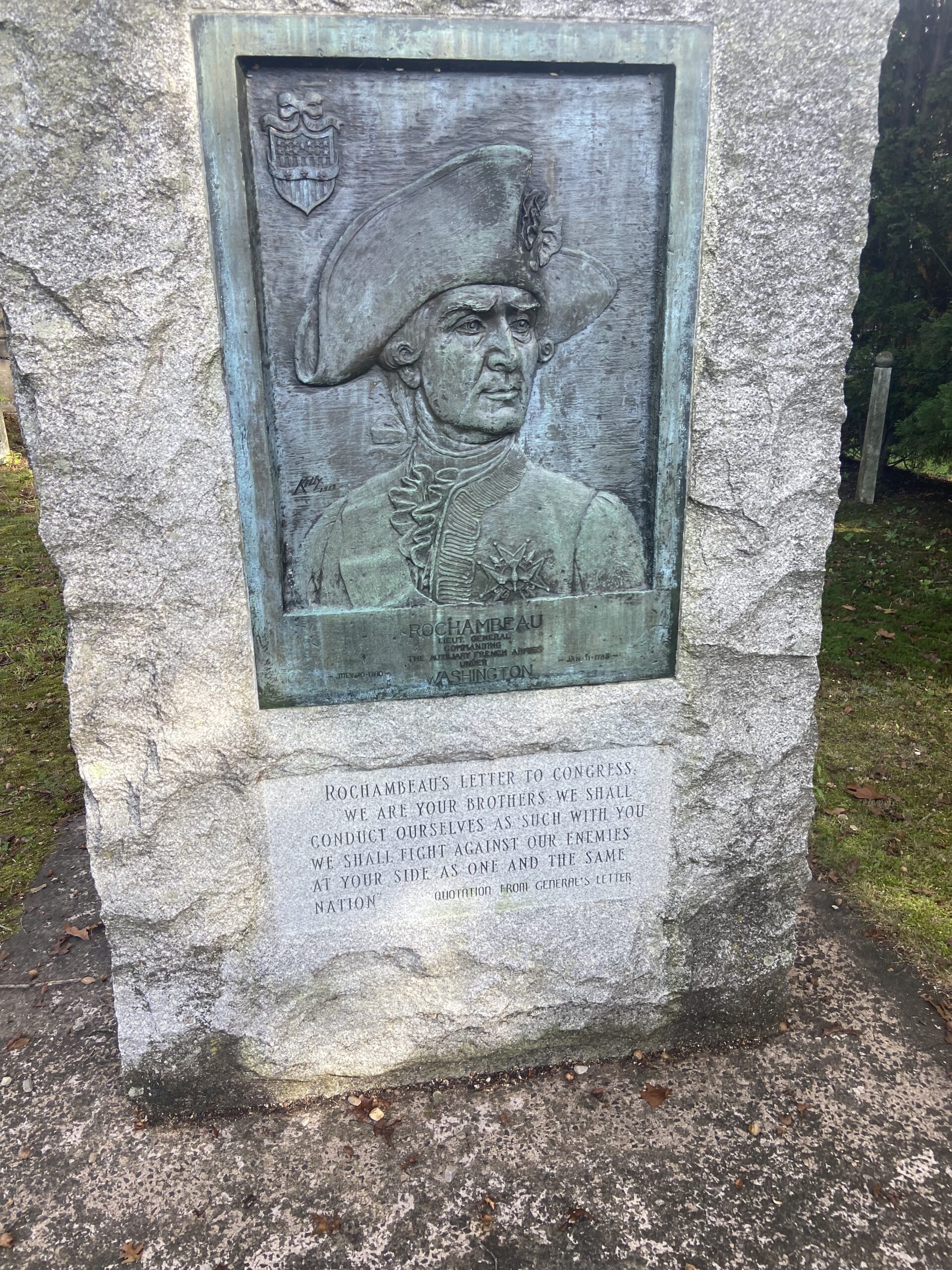
The Irish American Historical Society dedicated the monument and carving on June 30, 1912, erecting it in honor of Irish-American soldiers who fought alongside Rochambeau. Dubbed “Rochambeau Day” by town leaders, hundreds of guests attended, including Gov. Simeon E. Baldwin. Local photographer E. W. Hazard took large panoramic photos, many of which are now housed at the Southington Historical Society.
Irish-American artist James Edward Kelly was the artist responsible for the portrait of Rochambeau and the words from his letter to Congress that are carved on the back and on a smaller stone behind the main monument. Since the original dedication, it has been re-erected, cleaned, and improved multiple times by many groups.
Homes and local infrastructure sprang up years later. While the town has ownership of the monument, locals are mainly in charge of the upkeep since it sits in a front yard.
For many, the monument is barely noticeable among the trees and houses. But it remains a physical connection to Southington’s past and often overlooked Revolutionary history.
By Avery Martin, a journalism student at Southern Connecticut State University, reported this story in 2025 as part of Journalism Capstone coursework on the Revolutionary War.