By Kahiona Senior, SCSU Journalism student
Today it’s just stone and shadow, but during the Revolution, Tory’s Den in Burlington, Connecticut was a hiding place for those whose loyalty made them targets.
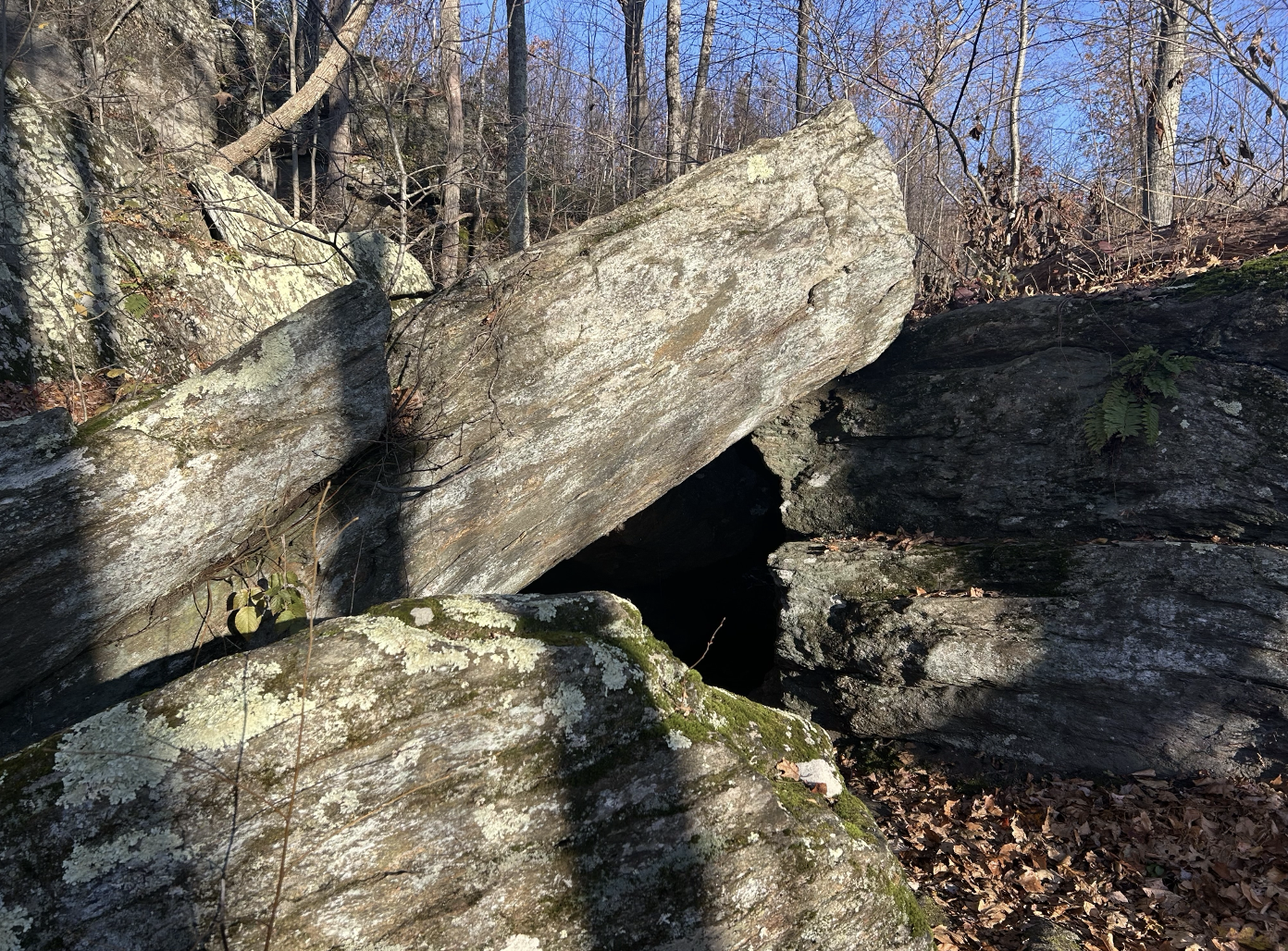
“They were threatened, they were bullied, if they weren’t kicked out of the area, they were physically harmed in some way,” Burlington Historical Society President Stacey Glastris said. “Folks were just out to get others. And if you weren’t on that side, they didn’t want you around.”
This kind of hostility was exactly what Loyalists like Stephen Graves experienced during the Revolutionary War. Graves lived in the southeast corner of Harwinton, Connecticut, near the border of Burlington, where his family owned about 200 acres of land. The den was on his land.
Graves was drafted into the American army and later refused service. He was deemed a loyalist suspect by the surrounding patriots in town. At the time, men who would not serve could hire a soldier to fight in their place. Graves denied the offer.
The Plymouth and Burlington area was divided in terms of patriots and loyalists. Some areas were more concentrated with patriots, causing loyalist men to hide in the den during battles or when the local Sons of Liberty came around to harass the opposition.
“He and his wife were still loyal to the king when the sons of Liberty came around,” said Glastris. “She would tell him and some other folks to go and hide.”
The formation of rocks is natural and about 10 feet wide by 5 feet high, in the woods along what is now a rocky trail.
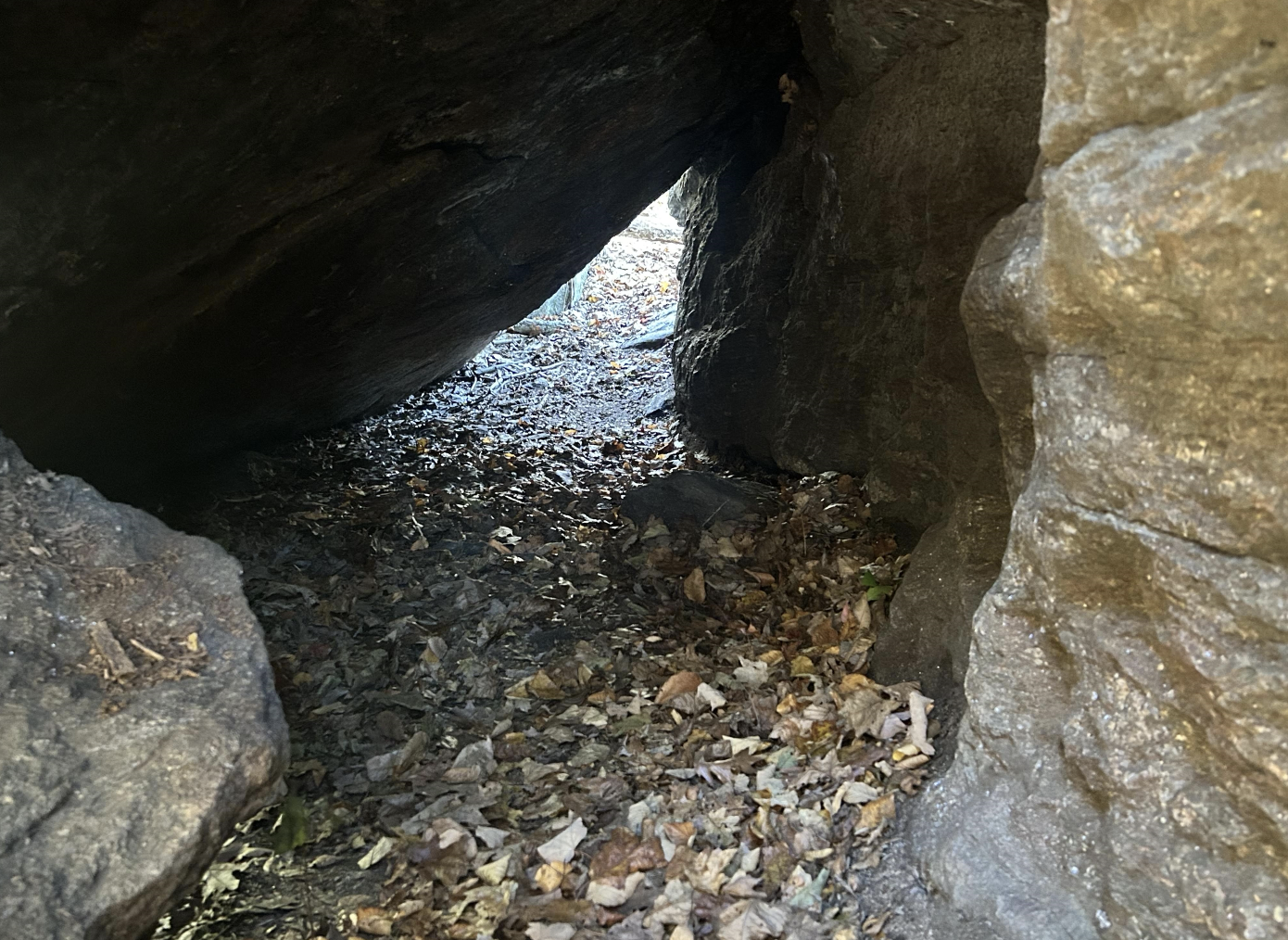
Matthew Malley, president of the Historical Society in Plymouth notes, “sources state 15-30 men would be stuffed into the den to hide from patriots.”
Now a trail on land owned by the Bristol Water Company, Tory’s Den remains in tact in the woods on the border of Burlington on the trail system of the Tunxis Trail.
By Kahiona Senior, a journalism student at Southern Connecticut State University, reported this story in 2025 as part of Journalism Capstone coursework on the Revolutionary War.