More than 800 Black soldiers from Connecticut served in the Revolutionary War.
Many fought to secure their own freedom from slavery. Nero Hawley, of northern Stratford, was one example.
“Nero Hawley was born into slavery,” said Nancy Fisher, co-president of the Trumbull Historical Society. “Pater Mallet’s daughter got married to Daniel Hawley, and [Mallet] decided to give Nero to his daughter and son-in-law as a wedding present, so Nero lived on the Hawley property.”
Nero Hawley enlisted in the Continental Army in 1777 in place of Daniel Hawley. His service included fighting in the Battle of Whitemarsh (where he joined General George Washington), and the Battle of Valley Forge. Hawley received an honorable discharge in 1781.
A year later, Daniel Hawley granted Nero Hawley his freedom.
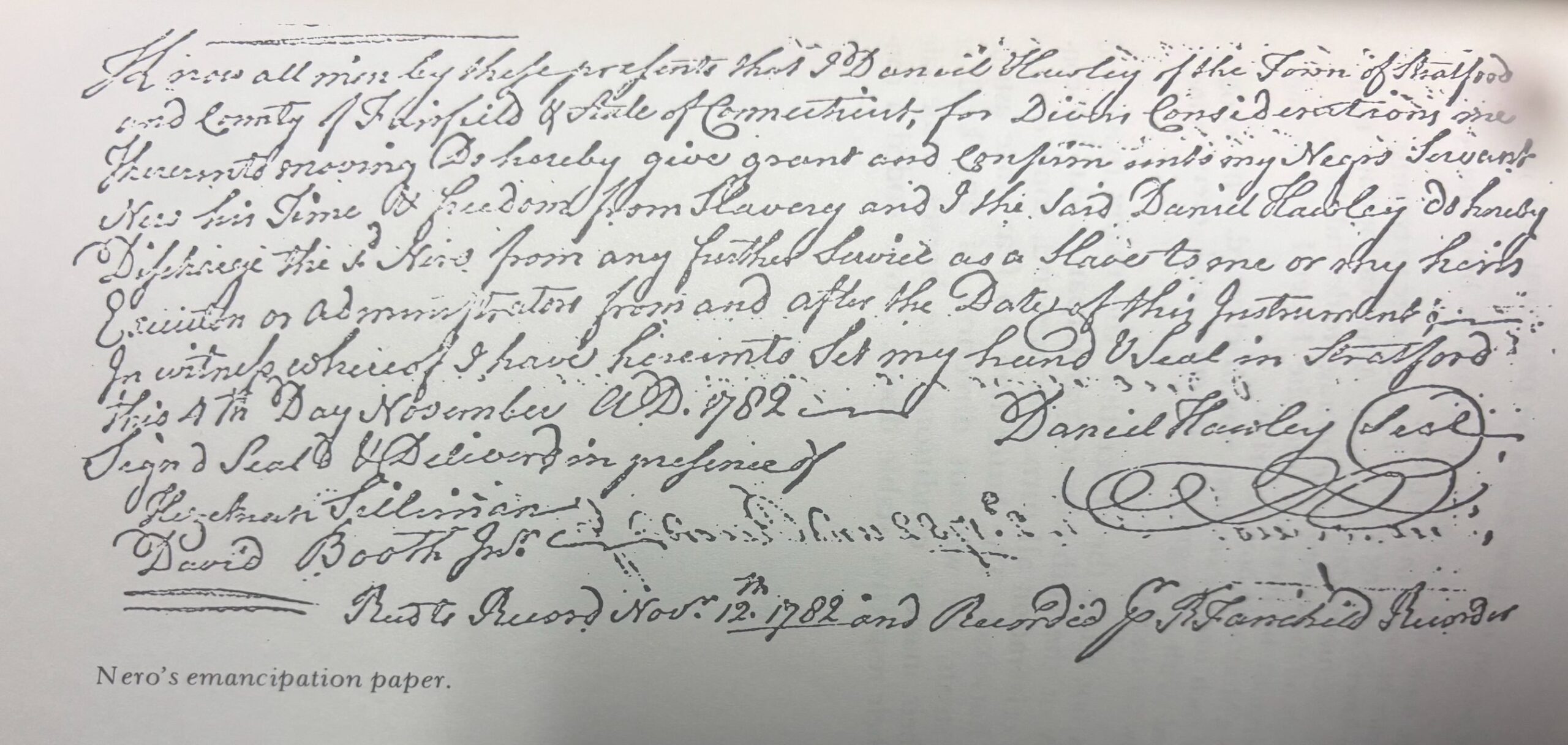
Ethan Steward, a researcher at Stratford Historical Society, notes that Hawley learned carpentry and brick-making during his enslavement, skills which came in handy once he earned his freedom.
“After gaining his freedom, which was promised to many slaves during his time, Hawley opened up a brick factory, and he gained a lot of success from it. He was even able to buy freedom for his wife and daughters,” says Steward.
Nero Hawley’s story is outlined in the 1975 book “From Valley Forge to Freedom: A Story of a Black Patriot” by E. Merrill Beach, and other media accounts published since.
The National Mall Liberty Fund is seeking to create a memorial in Washington D.C. to recognize the enslaved and free Black soldiers who served during the Revolutionary War. The group published data on Connecticut, highlighting 80 towns with Black soldiers serving during the war. Colchester, Norwich and Stratford had the highest numbers of enlistments, with 33, 32 and 32, respectively.
Several Connecticut historical societies have shared stories of the Black soldiers from their towns.
Michelle Tom, assistant director at the Windsor Historical Society, has published two articles on the topic. Her research has formally identified the names of seven soldiers from town: John Brister, Samsun Cuff, Barzilla Henry, Oliver Mitchell, Edward, Plymouth Freeman and Providence Freeman.
The Windsor soldier with the most information was Oliver Mitchell, whose pension application is stored at Windsor Historical Society. In the application, it lists his name, family tree, and important dates. Mitchell was 16 years old when he joined the Continental Guard.
In Milford, the Historical Ministry at the First Baptist Church maintains a monument to six Black soldiers from the town.
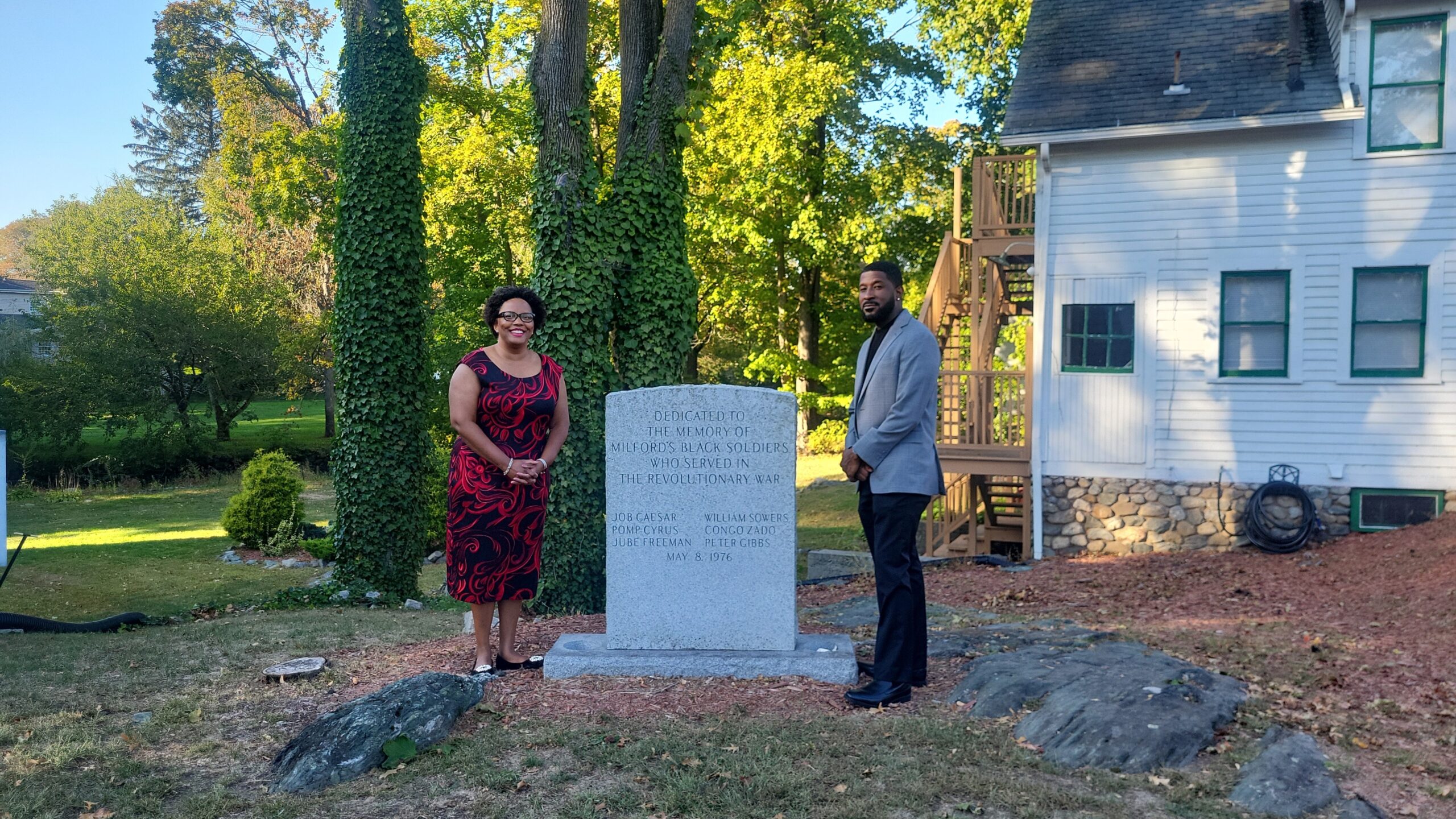
The Rev. Horace Hough, one of the pastors at the church, said that although these soldiers didn’t go to the church, they’re a part of the same community, and so the church has a responsibility to them– even in death.
“It’s not a glorious architectural structure, but it represents a community and a section of the community that’s still not widely represented. I think it’s important because it’s part of history, and those soldiers fought, lived, and died for the same cause that everyone else did in their war, and whether they were respected afterwards, before, or whatever the case is, doesn’t matter for us at this point,” said the Rev. Hough. “We want to make sure that they are recognized now.”
The headstone bears the names of the soldiers Job Caesar, Pomp Cyrus, Juba Freeman, Peter Gibb, William Sower, and Congo Zado. It was dedicated on May 8, 1976, in a ceremony led by the Rev. Charles Walker.
According to church documents, Walker read the following prayer at the dedication: “Preserve thou his nation which was established by prayers, heroic deeds, and sacrifices. May our country ever be the home of justice, liberty, and true brotherhood.”
This story is a combination of student work reported in 2025 as part of Journalism Capstone coursework on the Revolutionary War. Contributing reporters include Natalie Accardi, Solé Scott and Emily Sousa.