By Jay’Mi vazquez, SCSU Journalism student
A quiet home renovation on Main Street in 2019 unexpectedly ignited one of the largest historical research efforts in Ridgefield’s recent history.
When a homeowner uncovered human remains beneath their basement floor, the Ridgefield Historical Society stepped into action and opened a new chapter in understanding the town’s Revolutionary War past.
“[The uncovered remains discovered] was sort of the event that started the renewed interest in the Battle of Ridgefield,” Stephen Bartkus, executive director of the Ridgefield Historical Society said.
State experts determined the bones found were centuries old, and archaeologists soon arrived to excavate them. Because they were found near the site of the heaviest fighting, the working theory quickly became that the remains belonged to casualties of the 1777 battle.
The Historical Society has since led DNA testing, genetic genealogy, and forensic studies with the hope of identifying the soldiers and reburying them locally.
That discovery set the stage for a new wave of projects. Bartkus explained that the Historical Society went on to apply for and received grants from the National Park Service’s American Battlefield Protection Program.
“That allowed us to hire heritage consultants to do research into the Battle of Ridgefield,” he said. A second grant funded the archaeological fieldwork now underway.
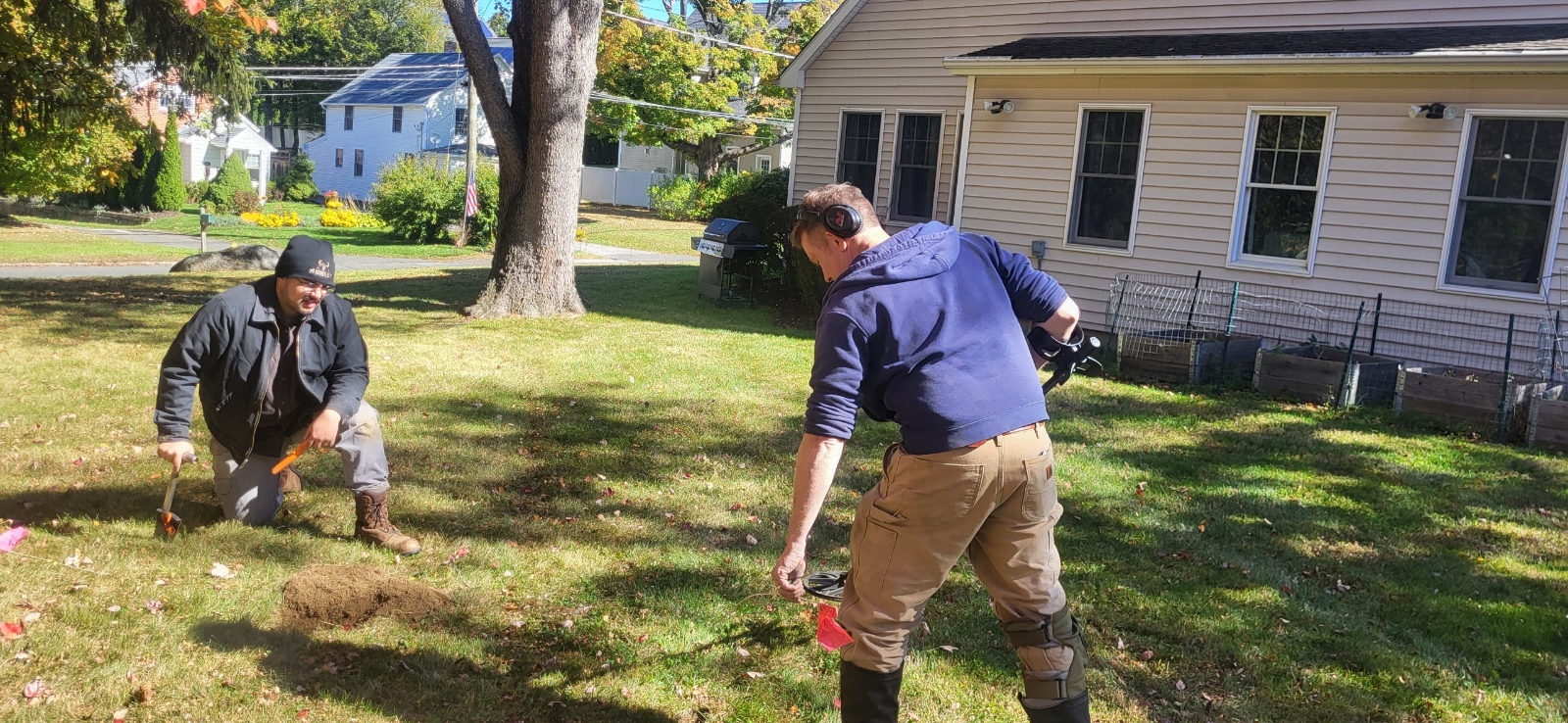
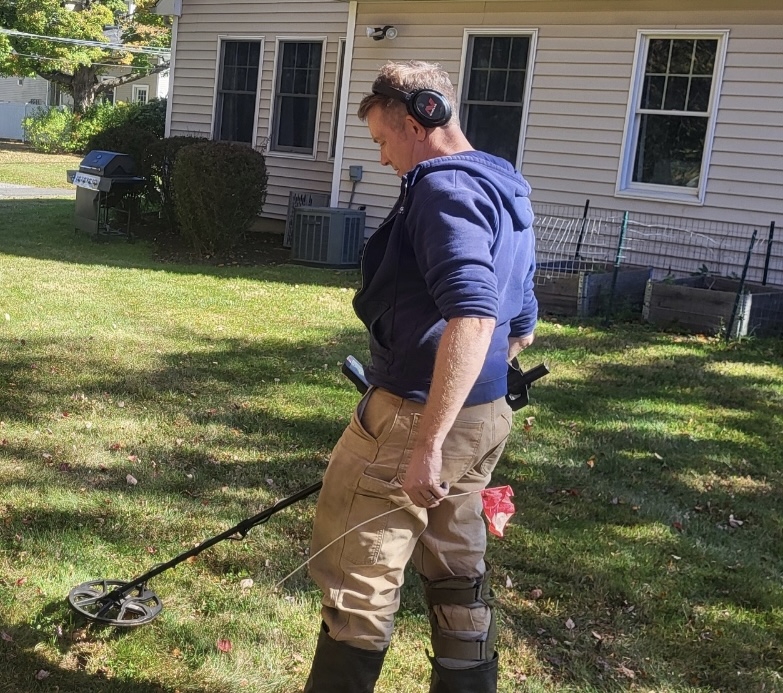
In 2025, teams from Heritage Consultants, with permission from private property owners across town, used metal detectors and ground-penetrating radar to search for hidden evidence of the 1777 clash.
“They’ve been finding a lot of interesting artifacts from the battle,” Bartkus said. “And the artifacts that they’re finding are really important because it’s allowing them to map the distribution of where the battle actually took place and where the different troops were moving.”
The ultimate goal is to place the battlefield on the National Register of Historic Places — a move Bartkus says is essential for long-term preservation as Ridgefield confronts modern development pressures.
The battle itself remains one of Connecticut’s most historically significant Revolutionary War moments.
“The Battle of Ridgefield was an engagement that took place when British General (William) Tryon marched about 2,000 troops to burn the city of Danbury,” Bartkus said.
After torching the supply center, British forces chose Ridgefield as their route back to Long Island Sound, believing they would face minimal resistance.
Instead, “everyone sort of got together,” Bartkus said, noting that militia forces led by Generals David Wooster and Benedict Arnold mounted a vigorous defense.
Although the Patriots lost, the fighting had lasting consequences. Bartkus believes the intensity of local resistance shaped British decision-making.
“We think that the British made a decision after that to never make an inland incursion in Connecticut because of the strong opposition that they did face here in Ridgefield,” Bartkus said.
As the town looks ahead to the 250th anniversary of the battle, the Historical Society hopes its efforts will ensure those stories and the land where they unfolded remain protected.
“We’re really grateful for all the property owners that have allowed us to study their property,” Bartkus said. “We couldn’t have done this without them.”
Jay’Mi Vazquez, a journalism student at Southern Connecticut State University, reported this story in 2025 as part of Journalism Capstone coursework on the Revolutionary War.