By Melanie Vargas, SCSU Journalism student
All the signers on the Declaration of Independence are men who served in the Continental Congress. However, one female name is printed on the bottom of the widely circulated second run of the document known as The Goddard Broadside.
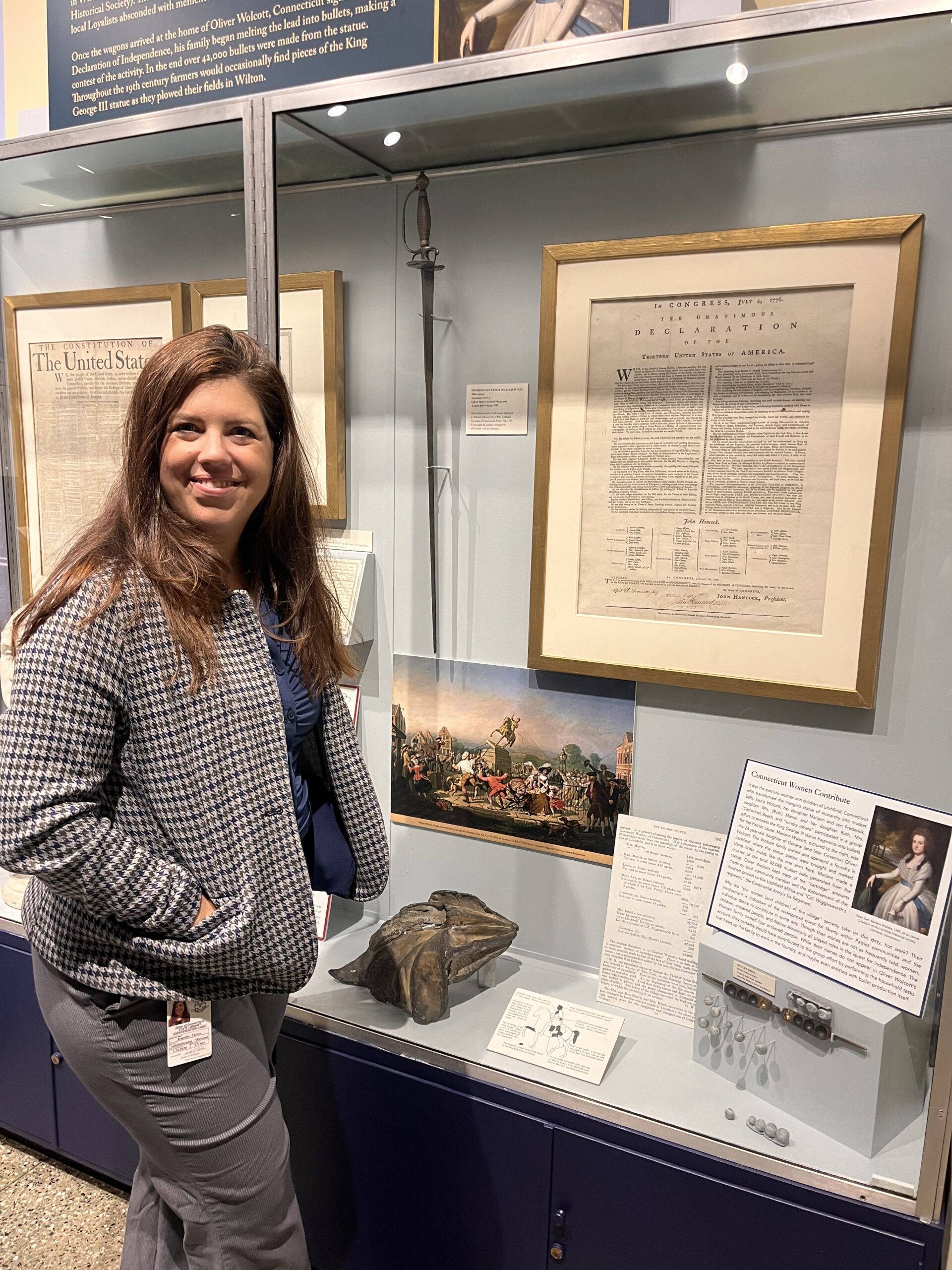
“Mary Katherine Goddard is unusual for her time to be a female printer,” said Jennifer Matos, an administrator at the Museum of Connecticut History, which holds a copy of the Goddard Declaration. “She was also the first female postmaster of Baltimore, and possibly even the first female postmaster in the United States and she was actually born in Connecticut and lived in Connecticut all her childhood.”
The museum is among dozens of Connecticut sites with connections to the Revolutionary War drawing attention during the nation’s 250th celebration in 2026. Additionally, the Connecticut Revolutionary War Trail, a project of the Connecticut Veterans Coalition, highlights more sites around the state worth visiting. See the full Connecticut Revolutionary trail here.
Goddard was a printer in Baltimore and an editor for the Maryland Journal during the Revolutionary War. In 1777, she was approached by the Second Continental Congress to mass produce the Declaration of Independence to distribute widely.
Matos said the document is not only special because it was printed by a woman, but it is the first document to include the word “unanimous” along with all the names of the signers.
At the time of the first printing by John Dunlap, New York had yet to give the Declaration of Independence approval. New York signed off on the document in August, making the Goddard Broadside copy the first document to be approved by all.
“This version is also special because it is the first version that includes the names of all of the signers. Each state is listed, and the signers from that state are listed as well,” Matos said. “Another interesting thing about the document is, unlike the handwritten copy that was signed by all of the members of the Continental Congress, the Goddard copy lists the signers, but it does not include their signatures. The only signature that you will see on the document is by John Hancock, and he was the president of the Continental Congress.”
Matos said it is unknown whether Goddard received backlash for printing the copy, though her full name on the bottom of the document was “pretty easy for people to overlook.” Still, she did receive some criticism for being a patriot.
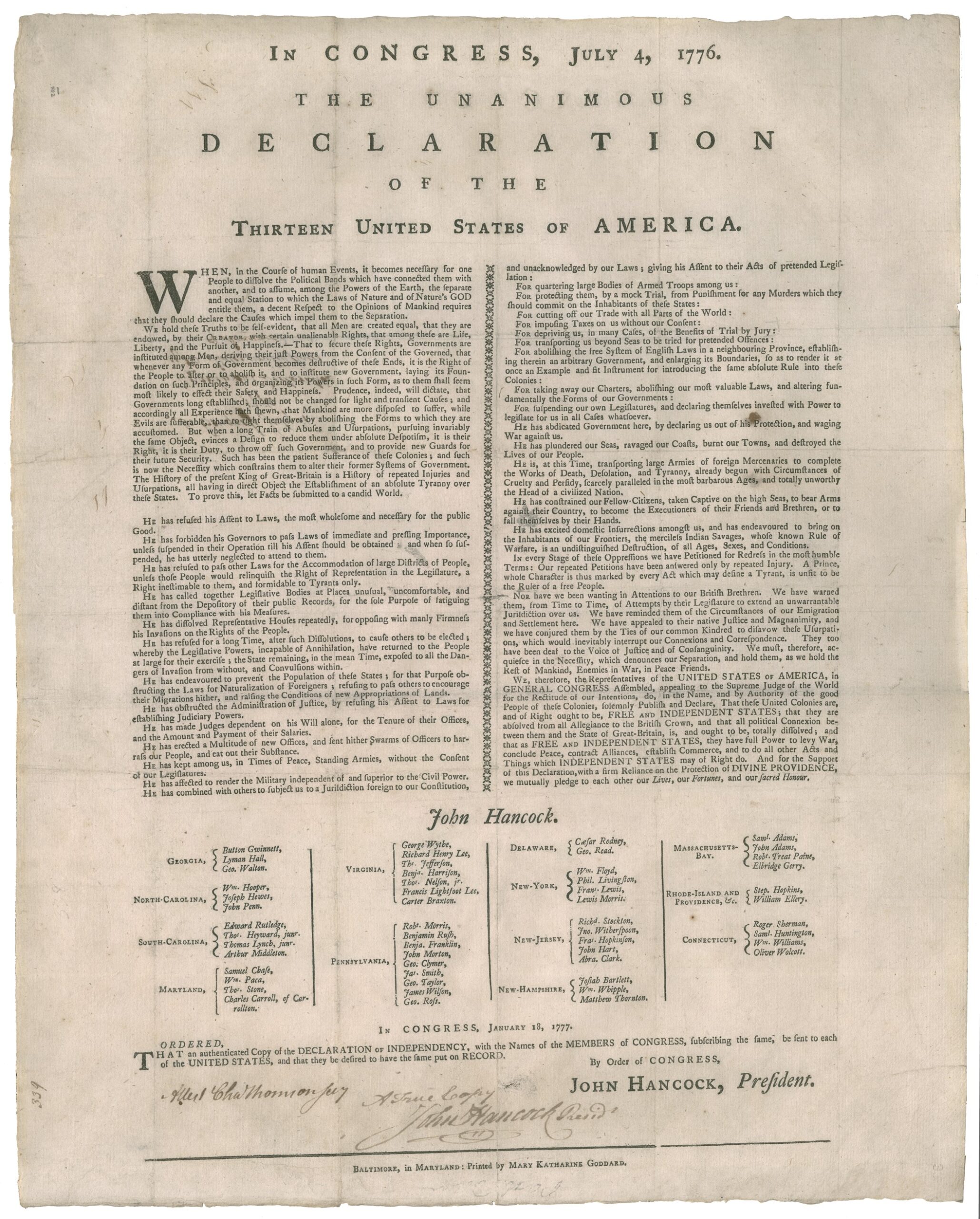
“She was very strongly patriot leaning and wasn’t afraid to print her opinions in the newspaper. So, we do know that there were times when her office was attacked, and she did receive some threats for her role in being a vocal printer. Now, whether or not those threats were made to her because she was female or not, we don’t really know,” Matos said.
The Declaration of Independence is such a part of American history that Matos believes it is being taken for granted and “we don’t necessarily think about the words behind it or the actions behind it.”
Melanie Vargas, a journalism student at Southern Connecticut State University, reported this story in 2025 as part of Journalism Capstone coursework on the Revolutionary War.